
Cynthia J. Castro, PhD, E.I.T
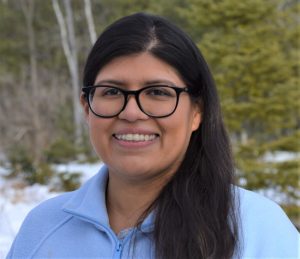
Welcome! My name is Dr. Cynthia J. Castro and I am currently a process engineer for Wade Trim, a multi-disciplinary engineering consulting firm that provides innovative solutions in civil engineering, planning, surveying, and environmental services. In my role, I specialize in planning and designing wastewater infrastructure projects, including treatment plant design, process modeling, facility planning, feasibility studies, and regulatory compliance to ensure safe, efficient, and sustainable wastewater systems.
Previously, I was a postdoctoral research scholar working with Dr. Daniel Yeh in his Membrane Biotechnology Lab at the University of South Florida. Our research group focused on developing engineered wastewater treatment technologies for non-sewered sanitation. Our most well known technology is the NEWgenerator, an off-grid, compact treatment-plant-in-a-box that treats wastewater and provides nutrients, energy, and water as value-added products. The NEWgenerator was recently featured on the Daily Show!
I was the technical lead for overseeing nutrient treatment and management strategies for decentralized wastewater treatment systems. As a postdoc and mentor, I worked with an amazing group of undergraduates, masters students, PhD students tackling different ways to improve the wastewater treatment train for decentralized systems. We primarily worked on anaerobic membrane bioreactors, nutrients recovery, advance oxidation, and infrastructure resiliency to develop non-sewered sanitation solutions that are not only able to treat wastewater effectively in any field deployment but will also remain reliable and sustainable for its entire life cycle.
Aside from my research role, I am passionate about teaching and mentoring undergraduate students, especially underrepresented minorities in STEM. As a hispanic female in academia, I don’t always see someone like myself represented in leadership roles, and though many of us minorities don’t think about it, it has a huge effect on how we perceived our future career trajectory. I think an important step in increasing diversity representation at the undergraduate level is by being transparent about the higher education process and the obstacles that we faced along the way as minority students.